Additional Review K - Feminism or Lexiography?
The Dictionary of Lost Words by Pip Williams
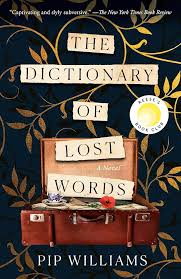
I found this book on a book swap shelf in the play cafe where they host a book club. Fantastic book shelf that one, always something good to be found, and this was no different.
I'm pretty sure our protagonist was supposed to be a likeable 'not like the other girls' type but I didn't find her that appealing. Don't get me wrong, I didn't dislike her either but she wasn't compelling.
The history underpinning the book, now that was fascinating. I've never questioned the existence of dictionaries of any sort, and grew up with the Oxford English Dictionary as a standard text in the school library as well as various condensed versions at home and in the classroom. Life in the 20th century.
I felt humbled reading about the origins of the Oxford English Dictionary, the sheer amount of work and skill that went into such a monumental undertaking. The men and women of the dictionary spent years, decades, whole lives dedicated to its publication. Esme's role in the story is to point out there was a lot of words missing since it was written from the perspective of educated English gentlemen. Women's words and course words of the common working folk are conspicuously absent and her quest to find those words is a joyful part of the book.
Setting a book across the turn of the 19th - 20th centuries is a great idea, so much social change in the lives of everyday people. It worked for Downton Abbey after all. However, unlike Downton Abbey, I could never get particularly attached to Esme and the trials and tribulations she went through. Maybe she was just had too much British stiff upper lip for my taste.